


This week’s article is going to be a bit different. For one, it’s the first proper collaborative piece I have had the pleasure of being a part of on Substack. A massive thank you to Evan from Play Moore for reaching out and suggesting we do something together. I’ve been a big fan of his work ever since he started writing on this platform as his scholarly perspectives on games always bring something interesting to the table. So getting to share a byline with him is a pretty special feeling.
This article is also going to be heavier than what you would typically find from either of our publications. When Evan and I were discussing potential topics to collaborate on, we stumbled onto the fact that we both played God of War Ragnarök around the time that our fathers passed away. What began as a search for some kind of analytical angle to tackle the game now turned into a deeply personal one.
What you are about to read are Evan’s and my personal stories of what that game meant to us during a time in our lives when loss and grief dominated everything. The first story you’ll read will be mine, followed by Evan’s.
It goes without saying, but please take care when reading. If you’re not in the headspace to do so right now, then that’s totally okay. If you are currently experiencing grief or have done so in the past, be gentle with yourself and feel whatever it is you need to feel. Do what you can to receive the support you need, in whatever form that looks for you.
As Kratos’s wife, Faye, says in God of War Ragnarök, “To grieve deeply is to have loved fully.”
The Phone Call
By Harry Fritsch
I am chasing a giant wolf through hell when I receive the worst phone call of my life.
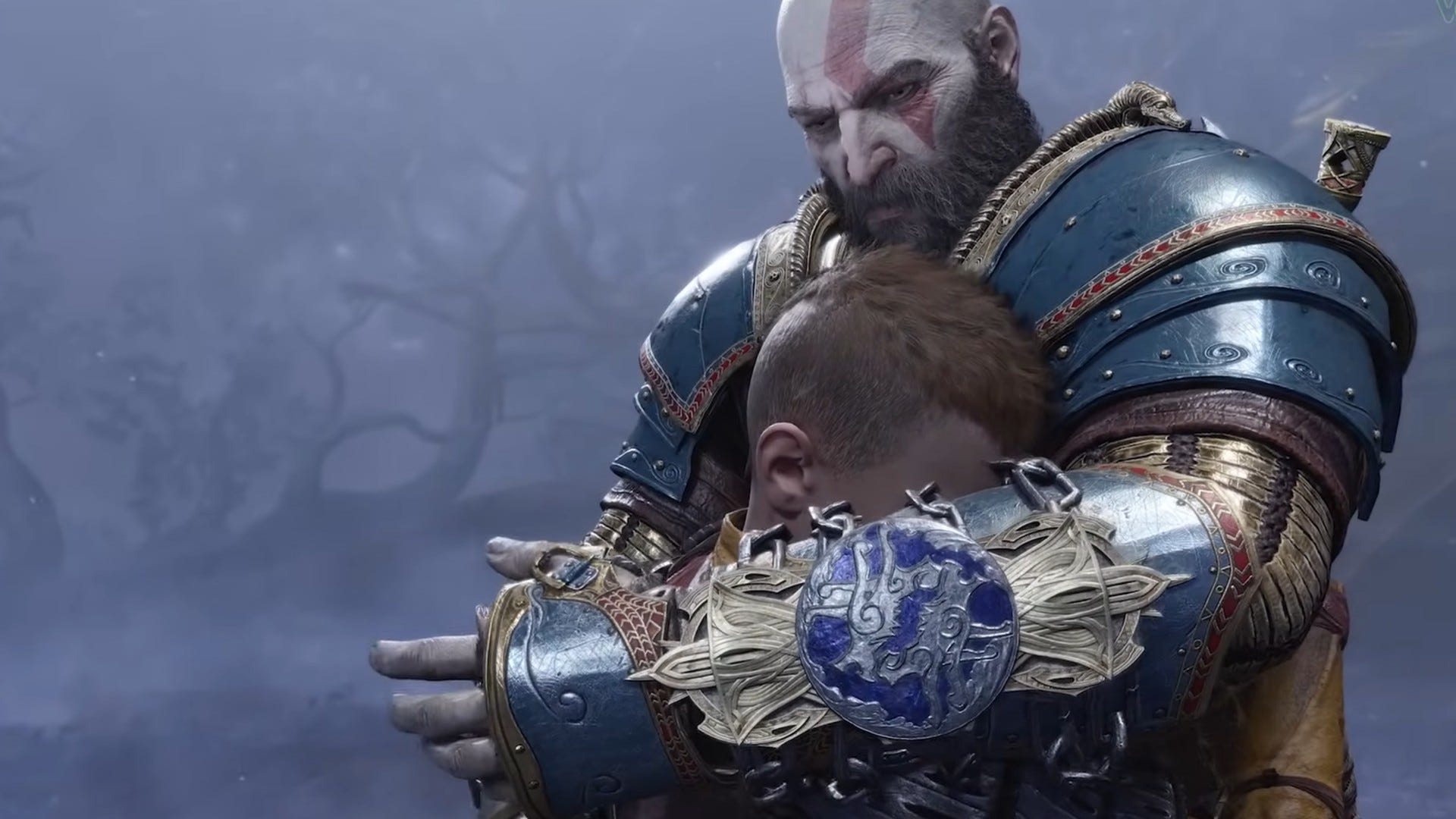
The giant wolf is Garm, a towering beast with blood-soaked fangs and the wild eyes of a predator. Hell is in fact Helheim, one of the Nine Realms where those who aren’t worthy of Valhalla spend their afterlives wandering in sorrow. It feels appropriate to acknowledge that I am not the one doing the actual chasing. That honour belongs to Kratos—the legendary Spartan warrior and demi-god—and his son, Atreus (AKA Loki…it’s complicated). I am controlling them in God of War Ragnarök, roughly halfway through the game, during a moment in the story where father and son’s relationship is threatening to reach its breaking point.
At this point in the game, Atreus has spent a lot of time away from his father, discovering more about his fate and identity, and making decisions that went against the wishes of his closest friends and family. One of those decisions was to release Garm from their imprisonment in Helheim out of pity for the colossal canine. It was a decision that, to put it lightly, could threaten the entire fabric of the Nine Realms and which Atreus, despondent with his own naivety, is desperate to put right with the help of his father. And so, Kratos and Atreus travel to Helheim to defeat Garm with no other companions—no Freya, no Sindri, not even Mimir.
The phone call? It’s from my Mum telling me that Dad had just passed away.
There are so many details in video game pause menus these days. Kratos’s bulking biceps fill up a not-insignificant portion of the screen real estate when you tap the touchpad in God of War Ragnarök. That leaves even less space for his stats, weapon and armour information, not to mention all the other tabs leading to skill trees, lore archives, and whatever else the UI team feels like cramming onto the screen. I wouldn’t say it’s overwhelming to the point of being illegible, but it’s certainly cluttered.
At this moment, however, the information in God of War Ragnarök’s pause menu may as well be written in Old Norse. Something’s stopped within me after that phone call and I’m just staring at the television. The screen is displaying that same pause menu of that same video game I had just been playing that same morning. But that experience already belongs to a past version of me.
Eventually I walk over to another canine. Not some hound from hell, but my beautiful pet labrador, at this moment appearing heaven-sent. The only other companion who is home with me at the time. I leash her up and we go for a walk around our neighbourhood. It’s a typically warm February day in Brisbane and the route is familiar, but the whole world has smeared around the edges. We return home and I send a message to my wife who is still at work. It’s only then that I notice I have yet to turn off the PlayStation 5. The pause menu is still up on the screen. Behind it, Kratos and Atreus are still in Helheim, still tracking down Garm, still dealing with their familial tension. I switch it all off, turning away from that old version of me and listen to one of Dad’s favourite songs.
A month passes and we say our goodbyes through a daze of shock and grief. The days mostly bleed into one another as we float through this shattered sense of reality. I’m away from home, spending time with family and loved ones, all of us trying to find some form of normality again. It’s mostly futile, of course. Everything is just too recent, too raw for anything to register as normal.
We’re stuck in our own cluttered pause menus. Life has stopped and we can’t make sense of any of it. There’s too much on our screens. Messages of condolences arriving from every direction, an ever-growing checklist of funeral logistics to tick off, memories poignant and painful flooding in. All we know is our stats have plummeted. Quality of Sleep = down. Clarity of Purpose = down. Expressions of Joy = rock bottom.
Gaming obviously isn’t front of mind when I do return home. There’s a readjustment period after what has been a harrowing few weeks, and the concept of finding pleasure through entertainment feels foreign, if not downright laughable. Eventually, though, I do turn the PS5 back on. I settle down into our apartment’s couch, my hands wrap around the DualSense controller, and I load up the most recent checkpoint on my God of War Ragnarök save file. The same one that I had been playing when I received the worst phone call of my life.
And there they are. Kratos and Atreus, father and son, in the exact same position I had left them before everything stopped. I push up on the analog stick and they begin moving. My life may be spiralling into a pit of despair, but there’s still a giant wolf from hell to catch.
Dad wasn’t much of a gamer, but he was always aware of the God of War series. He used to simply call it the “Kratos!” game, presumably because he found the hyper-masculinity of the main character both absurdly ridiculous and kind of epic. Which, fair. He would occasionally watch me play back when I was a teenager, and I wish he was with me in this living room right now. Undoubtedly, he would be repeatedly asking when “Thor is coming into the game?”—the God of Thunder was one of his favourite super-heroes.
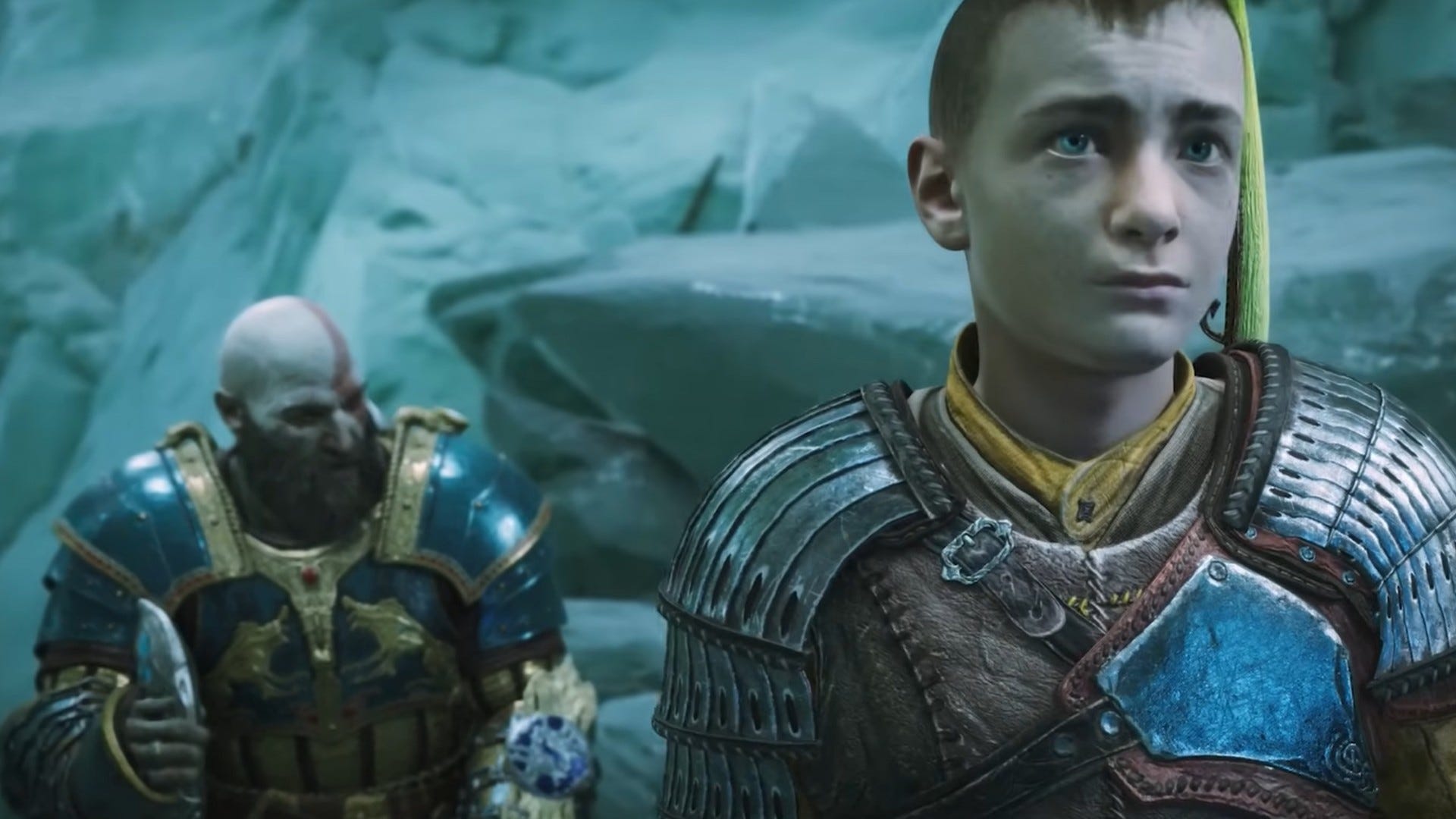
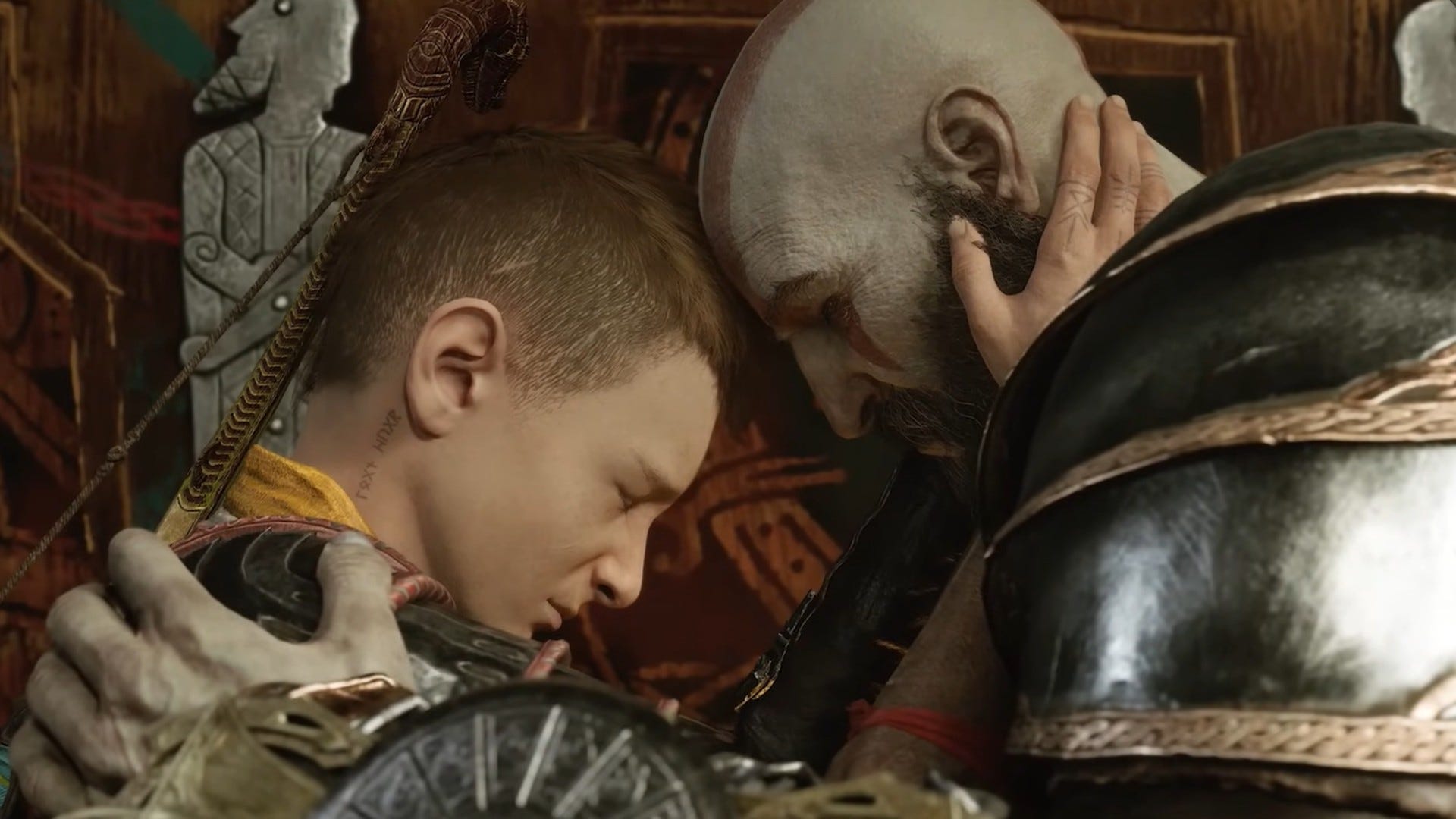
I keep playing, moving Kratos and Atreus through Helheim as the two of them begin to work through their differences. Atreus admits to being in over his head while Kratos apologises for his often-suffocating parenting style. They both promise to do better.
Eventually, Garm is tracked down and a boss battle against the legendary beast ensues. I control father and son as they fight side-by-side, and for a brief second, I catch a glimpse of that old version of me. The one that existed before the phone call. And even though I know I’ll never be able to fully reunite with them, it’s good to know a part of the old me still exists in this save file.
Garm is defeated. But instead of killing the beast, Kratos and Atreus decide to infuse the soul of their deceased pet wolf, Fenrir, within Garm’s body. It’s a beautiful moment in the game. Rather than choosing death, the two of them have decided to bring something to life.
An Apocalypse Taught Me to Hope
By Evan C. Moore
In February 2022, my Dad was diagnosed with terminal cancer in his hip bone. For now, I’ll skip the descriptions of his treatment. He died on July 1 of that year, at 58. During the months when I helped to take care of him, I read Pet Sematary and played Breath of the Wild for the first time (among other things).
Strangely enough, though I got incredible meaning out of these works during one of the most difficult times in my life, they were not the works that brought me to tears in grieving for my Dad. Neither were some artistic or expected games that were definitely supposed to affect me deeply: That Dragon, Cancer maybe, or pieces about grief and helplessness and complicity like Dear Esther, Firewatch, or Kentucky Route Zero. Instead, it was God of War Ragnarök.
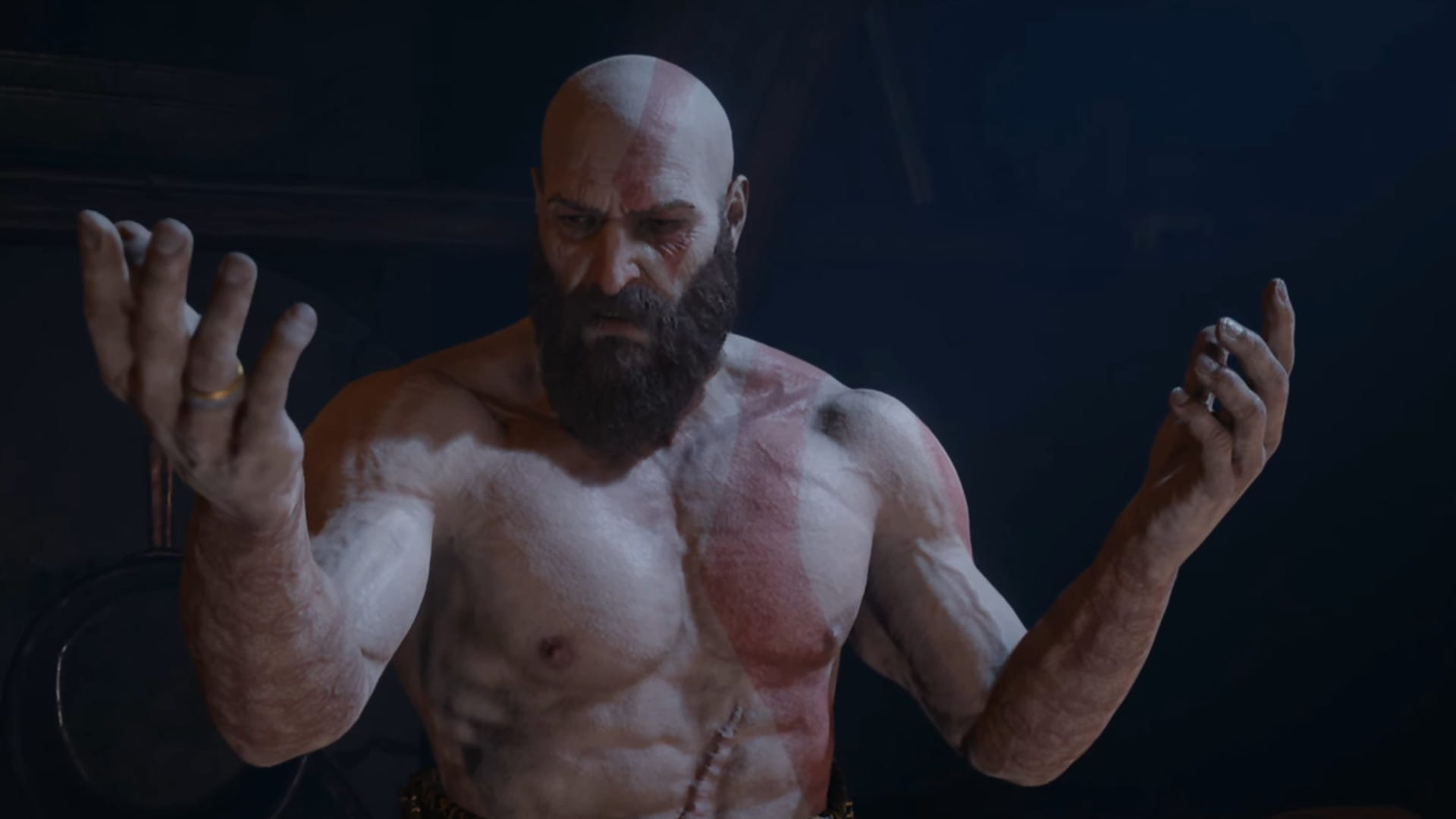
I cried when Kratos, tired and uncertain, took off his armor and laid in his bed, the camera moving in on the cracked skin on the back of his hand. He flexed his fingers, as if remembering his strength, and I felt once again the last of my Dad’s breath. I reclined on my couch with some homemade egg nog; I begged Dad to eat. I held my controller to watch Kratos; I held Dad’s hand, withered in the same places, as the chemo and cancer teamed up to weaken him.
This piece is about the first time I cried during my initial playthrough of God of War Ragnarök, in November 2022. Thanks to The Video Game Storyteller for teaming up with me on this (and for patiently waiting for my drafts).
Why God of War Ragnarök?
Kratos and Atreus exist through God of War Ragnarök in defiance of prophecy and expecting certain doom. Vengeance, like other GOW games, is a constant, and we are asked to question its morality and its usefulness. See, in God of War (2018), the pair killed Thor’s sons Magni and Modi; these two, Snorri the writer of the Edda tells us, will survive Ragnarök and help establish the new world to come. In the game, they believed themselves invincible, guaranteed by prophecy to live through the end of this age.1 Thor seeking vengeance for his sons and Odin seeking at least a truce after the death of Baldur are the catalyst for the sequel journey.
Additionally, in the final moments of that first game of the Norse duology, Kratos and the player learn that Kratos is prophesied to die in Atreus’s arms. It is not unreasonable to go through Ragnarök believing that Kratos might very well die—both characters, though they do not admit it to each other at first, believe so.
So I was ready for a game about questioning fate and about grieving the loss of a father. I was already in that headspace. I knew that my Dad’s own death was fated upon diagnosis (I was hoping for a few years, not months; my Dad was more optimistic). Kratos and Atreus were a favorite of mine since 2018, and I knew the sequel could be just what I needed.
And it delivered. I loved being back in that world. I’d played 2018 no fewer than four times since its release, so this was special. I embarked on the next journey that I knew would include loss and melancholy.
It started fast. Freya appears very early on in the story, attacking the pair in vengeance for her son Baldur. Kratos and Atreus hold her off and do everything they can not to hurt her as they defend. They respect her tenacity; after all, we killed Baldur (after a couple warnings) for trying to kill her in his own vengeance. Her anger is understandable. There are too many interesting themes to keep track of. Let me move on. Revenge is something I’m thinking about when I play. What vengeance can I have for my Dad? What can I fight when his own body betrayed him?
But, of course, there’s nothing to be done against cancer, and there’s nothing to be angry at. Perhaps at my Dad himself for not going to the doctor sooner, but that feels…empty. Like I’m missing the point. Perhaps I could be angry at the world? God? Apollo? Some force beyond us that allows our cells to disobey their purpose? My Grandmother—Dad’s mom—was still alive when he passed, and she certainly took some anger out on God. Her anger was about her own sadness, not about the unfairness of cancer.2 I don’t think he heard her. No, in the days after his death, I was angrier with the cemetery office and the people who edited the obituary I wrote than I was with anything to do with his death itself.
Kratos and Atreus drift apart in the game. Atreus, identifying at times as Loki, is discovering himself away from his relationship with his father. I needed to figure out who I was without my Dad’s influence in my life. I’d moved out of the house; we talked on the phone every two weeks or so; I certainly had my own life and identity. But now I was “the guy with the dead dad.” I was still figuring out whether that was a description I was comfortable with.
I realized that, like Kratos and Atreus couldn’t escape Odin and Thor coming for them, I couldn’t any more escape being the guy with the dead dad. That was part of me now, and whatever came out of it might as well have been fate.
So, why did Ragnarök get me? Because everything leading up to that moment was connecting me with my perception and reflection on my grief. The game was asking me what the nature and benefits of vengeance are and whether I can turn myself into someone I haven’t yet been.
That Moment was Written, and I Did What was Necessary
There’s a part early on in the story when Kratos and Atreus need to hide out with Sindri and a couple others in the Realm Between Realms along a branch of Yggdrasil so that Odin cannot spy on them (or, so they hope). This is when Kratos takes a few long breaths, disrobes, and flexes his hand.
And, my friends, it got me. Just a hand, moving gently and softly. Nothing special about an older character (god though he be) feeling tired. Nothing unique about wrinkles telling the audience that the aged father must be replaced by the learning son.
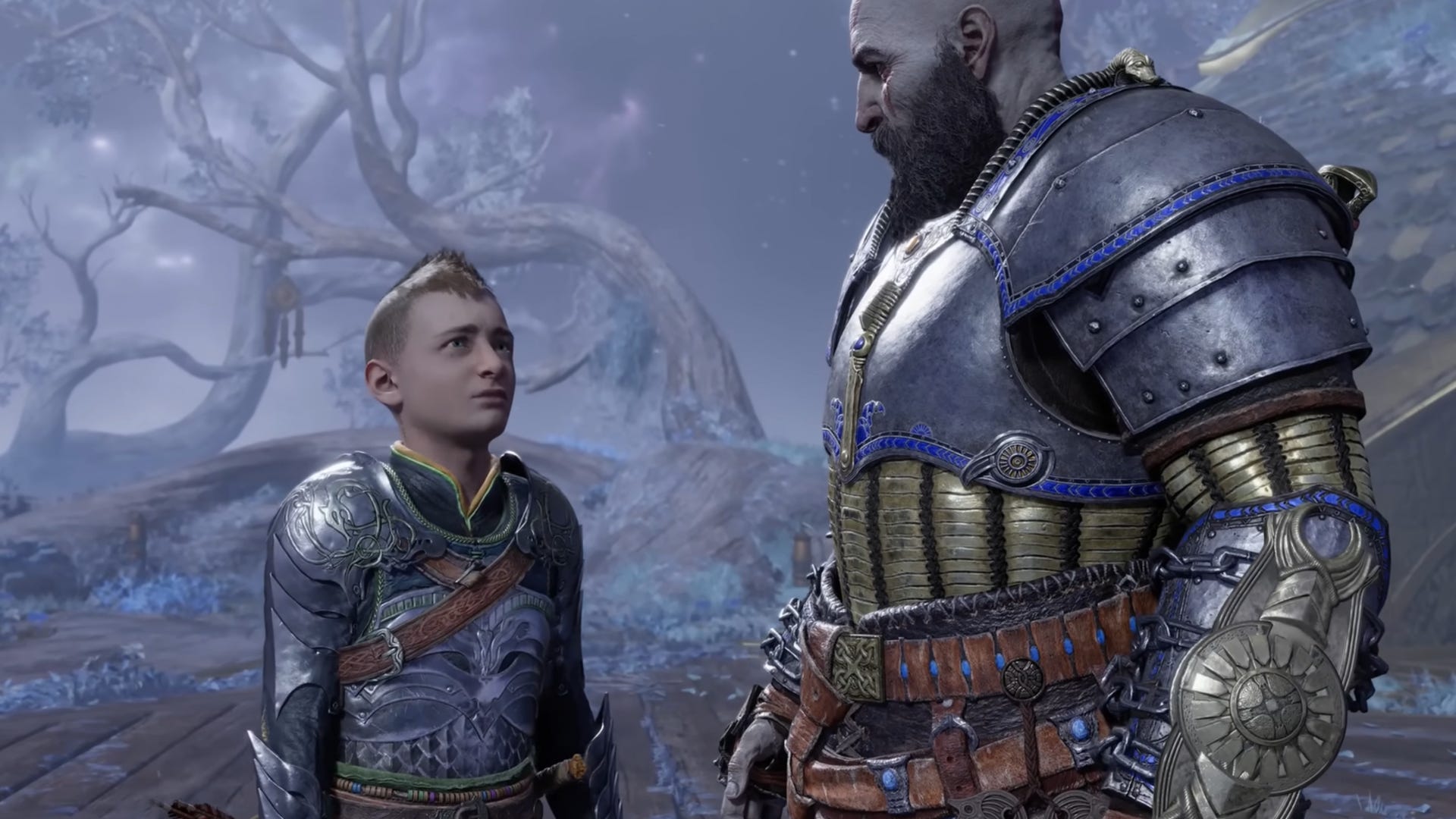
But this game was priming me already to be thinking about my relationship with my Dad and what his death actually was—not just for me, but for him. More than anything else with a focus on grief or recompense or fatherhood, God of War Ragnarök encouraged me to interact with it by enacting and receiving the mundane tasks of fatherhood. At once, I could notice Kratos’s shortfalls while understanding his decisions and respecting his attempts. And I could feel the weight of his duty to his son crash down on him when he finally got a second alone.
Later in the game, in order to prioritize their agency and not succumb to the passivity of fate, Kratos tells Atreus, “Do what is necessary. Not because it is written.” One of the thesis statements of this game is, more or less, “Fate is the consequences of our choices, often predictable; to change oneself and improve is a constant battle, but one which changes your fate.” If you know me, you might know what I’ll say next: it’s pretty close to virtue ethics, the moral theory that our character is the source of our ethical decision-making, and we can change it through great effort and meaningful habits.
Heavy spoilers ahead!
And by golly do our main characters change fate. Kratos changes pretty drastically by the end and makes decisions out of compassion rather than simple strategy. Odin dies in the position Kratos was supposed to—rather than Kratos dying to Thor’s hammer, Odin dies to Sindri’s.
Vengeance won the day, despite Kratos’s disappointment.3 But just as importantly, and the reason to retain hope, is that prophecy did not define the outcome. Fate had no hold on Kratos. By saving all he could and not chaotically smashing through every bystander or innocent person in his way, Kratos allowed his old self (“Kratos of Sparta” as identified by the Norns) to die and crafted a new self (“Kratos of the Rebuilding”, as I like to think of him) to become as he leads the pantheon after Ragnarök.
Without death, there is no rebirth. Sure. Cycles and stuff, I get it. But, for me, there is no death that we cannot at least try to rebuild from. The end of an era means the beginning of a new one. The end game content in God of War Ragnarök features Kratos and Freya together moving around the realms, rebuilding and recovering from the war. Out of war, peace. Out of death, hope for those who remain.
The spoilers have ended!
This was what I needed to experience in the fifth month of my life after Dad. It helped me accept what happened and how I felt, including all the contradictions that came with it.
I would have worse and more long-standing episodes of grief going forward. And it’s not over, of course. This was one of many short highlights that fall that helped me deal with the world I still recognized but felt weird walking through.
My tears came suddenly and stopped quickly when I saw Kratos’s hand, mimicking my dying father. I hadn’t realized what the game was building up to become within me until that moment; I hadn’t realized what I still needed to let out.
This is a process all must endure, and I hope this experience meets you as well as it met me (if it yet remains ahead of you).
Thanks for reading, everyone. This was a hard piece to write, and a harder one to edit. When I talked to Harry about what we could write about together, I thought about God of War Ragnarök as a way to fit within the Ludonarrative Arcs series. As we talked about themes and critiques, we realized we had very similar grief stories to tell. I’m really thankful that it came together like it did.
The games do not adapt the Norse stories or prophecies without change, but most of the major events should be taken seriously. The death of Baldur is, in fact, what sets Fimbulwinter upon them. When events of the second game diverge from the tellings of Ragnarok (such as Odin being the one to kill Thor), they fit within Kratos’s ultimate statement on choice and fate (that fate is the sum of the consequences of our choices). More on this at the end.
I won’t get into this too much. She cared too much for her own outlook and not enough about the pain and suffering her own son went through. I’m missing some sympathy for her; I might find it someday, but for now I’m not looking for it.
One of my favorite lines of dialogue, ever: Kratos: “Justice is not what we seek. It is vengeance. Every path I walk…leads back to vengeance.” Atreus: “Maybe that’s all we have left.”
What a raw and engaging read from both of you. As someone who has also lost parents, I'm, first off, really sorry for you loss, and also glad that you are at a point where you both feel like you can write about it. That's a lot. And a testament to the work you've done to get here.
Gaming, like all art, is a fantastic frame of reference for processing emotion. And feeling it in a healthy way too? The fatalism in games can somewhat reflect that in life, there's some things we can affect, and others that no matter what we do, we can't change. I've definitely felt that in moments where parents or loved ones die, and its just part of the narrative.
There's still bits in games, that hit me so much harder because of my own loss, than the general public. Maybe I'll open up about it one day. But for now, I think you've both really shown how this can be done tastefully and in way that treats the topic with so much reverence. Thank you both for pulling this together.
This was a hard one to read, but an equally beautiful one. I read every word of this with the utmost attention. I lost my dad when I was just becoming a teenager, and even though it's been many, many years, the grief never really left, it just changed form. It went from a searing pain to a persistent but dull ache, and I could process it in healthier ways as I grew up. And one of those ways is, as you both beautifully wrote, gaming. How wonderful it is that we can find a piece of ourselves in these stories. They can mark some of the most significant moments of our lives, and help us heal in different ways.
I'm sure writing this piece was not easy, but writing can also be a catalyst for healing, and I hope putting your experience and thoughts into words helped you with the journey of grief and healing. You've both done a wonderful job with this article, and I'm glad to have read it. Thank you both for sharing a piece of your souls.